
Western music has traveled a remarkable journey spanning more than a thousand years. From humble monastic chants to the complex symphonies of the classical masters—and even to today’s digital soundscapes—the story of Western music is a reflection of human creativity, culture, faith, and innovation. This blog explores the major periods of Western music, their defining characteristics, and why they continue to shape the music we hear today.
music in ancient times – Search
1. The Ancient and Medieval Foundations (Before 1400)
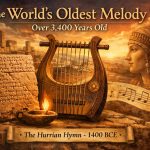
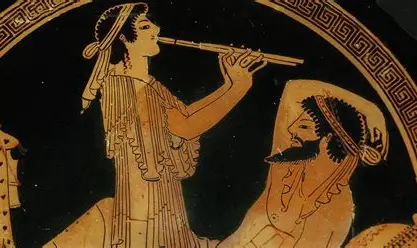
The roots of Western music lie in ancient civilizations such as Greece and Rome, where early theories of scales, harmony, and rhythm developed. But the major turning point arrived during the Medieval period, especially within the Christian church.
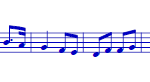
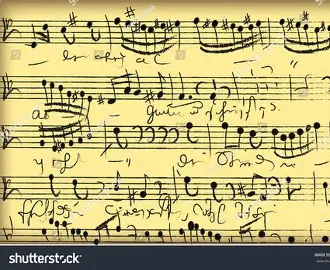
The most iconic music of the Middle Ages was Gregorian Chant—a calm, monophonic (single melody) form sung by monks. These chants were not written at first, but passed down orally. Eventually, the need for accuracy brought about the invention of musical notation, one of the greatest milestones in music history. The simple lines and neumes (symbols) used by monks evolved into the staff notation we still use today.
As churches grew, composers experimented with adding more voices. This gave rise to polyphony, where multiple melodies are sung at the same time. Composers like Hildegard von Bingen and later the Notre Dame School paved the way for more structured harmony.
2. The Renaissance Era (1400–1600): The Age of Rebirth
The Renaissance brought a new emphasis on human expression, art, and scientific inquiry. Music became more expressive and harmonically rich. Composers such as Josquin des Prez and Palestrina created lush, balanced choral pieces that are still performed today.
Key features included:
Smoother polyphony
Use of modes (early scale systems)
Increasing attention to text clarity
Expansion of secular music, including madrigals
Instrumental music also gained importance, with early versions of viols, recorders, and keyboard instruments becoming popular.
3. Baroque Brilliance (1600–1750)
As you’ve been studying the Baroque period, you already know it was a time of dramatic contrast and ornamentation. The Baroque age introduced:
Tonality (major and minor keys)
Opera (invented around 1600)
Concerto, cantata, oratorio
Highly decorated melodies
Great composers included Johann Sebastian Bach, George Frideric Handel, and Antonio Vivaldi. Bach’s fugues demonstrated unmatched mastery of polyphonic writing, while Handel’s Messiah became one of the most beloved sacred works in history.
The Baroque era also saw the rise of instrumental virtuosity, where performers pushed instruments like the violin, harpsichord, and organ to new technical heights.
4. The Classical Period (1750–1820): Balance, Clarity, and Form
After the complexity of the Baroque era, Classical period composers sought clarity, order, and balance. This era produced the forms that still shape Western music education today:
Sonata form
Symphony
String quartet
Concerto
The “trinity” of Classical masters—Haydn, Mozart, and Beethoven—transformed music forever.
Haydn developed the symphony and string quartet.
Mozart mastered opera and instrumental music with unmatched elegance.
Beethoven, bridging Classical and Romantic periods, expanded musical expression with bold harmonies and emotional depth.
The orchestras grew larger, and music began shifting from entertainment for aristocrats to public concerts accessible to ordinary listeners.
5. Romanticism (1820–1900): Music of Emotion and Imagination
The Romantic era emphasized emotion, personal expression, and storytelling. Composers wrote music that expressed love, nature, tragedy, nationalism, and even supernatural themes.
Key characteristics:
Highly expressive melodies
Expanded harmonies
Larger orchestras
Program music (music with a story)
Famous composers included Chopin, Tchaikovsky, Schubert, Liszt, Wagner, Brahms, and many others. The orchestra grew to include more brass, percussion, and new instrumental colors. Romantic music pushed the boundaries of what harmony and orchestration could achieve.
6. The Modern and Contemporary Eras ( 20th Century: 1900–Present)
The 20th and 21st centuries exploded with experimentation. Composers broke traditional rules, exploring new styles like:
Impressionism (Debussy, Ravel)
Expressionism (Schoenberg, Berg)
Minimalism (Philip Glass, Steve Reich)
Electronic music
Film music (John Williams, Hans Zimmer)
This period saw the birth of jazz, pop, rock, gospel, opera fusion, and countless styles influenced by global cultures. Music became more diverse than ever before.
Why Western Music Still Matters Today
Western music forms the foundation of much of the world’s musical language today. Concepts like notation, harmony, scales, and orchestration stem from this long history. Whether you’re listening to a Bach fugue, a Tchaikovsky ballet, or even a modern film soundtrack, you’re hearing the echoes of centuries of development.
Understanding Western music also enriches our appreciation of world music traditions—because we see how each culture tells its story through sound.
More Stories
Music, Time, and the Sound of New Beginnings
? Did You Know? The Piano Was Invented to Play Soft and Loud
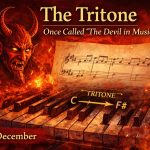
? Did You Know? The Tritone Was Once Called “The Devil in Music”