

Today, the piano is one of the most expressive instruments in the world. From the gentlest whisper of sound to powerful, thunderous chords, it responds beautifully to a performer’s touch. But did you know that this ability was the very reason the piano was invented?
Harpsichord vs. Piano: How Are They Similar & Different?
? Before the Piano: A Musical Limitation
Before the invention of the piano, keyboard instruments such as the harpsichord and clavichord were widely used.
The harpsichord produced sound by plucking strings. No matter how hard or softly a key was pressed, the volume remained almost the same.
The clavichord allowed slight dynamic variation, but it was too quiet for concerts or large gatherings.
This meant musicians could not easily express emotion through changes in loudness. Music lacked the dynamic contrast that singers and orchestral instruments already enjoyed.
https://en.wikipedia.org/wiki/Piano
? A Revolutionary Idea by Bartolomeo Cristofori
Around the year 1700, an Italian instrument maker named Bartolomeo Cristofori introduced a new keyboard instrument that changed music history forever.
He named it “Gravicembalo col piano e forte,” meaning “a keyboard instrument with soft and loud.”
Over time, this long name was shortened to pianoforte, and eventually to piano.
? Did you know? The word piano itself means soft in Italian, highlighting the instrument’s expressive nature.
? What Made the Piano So Special?
Cristofori’s major breakthrough was replacing plucked strings with felt-covered hammers. These hammers strike the strings when a key is pressed.
Press a key gently → the hammer moves slowly → a soft sound
Press a key firmly → the hammer moves faster → a louder sound
For the first time in history, a keyboard instrument could respond directly to the player’s touch.
? How the Piano Changed Music Forever
Once composers realized what the piano could do, music began to evolve rapidly.
Classical composers like Haydn and Mozart embraced the piano for its clarity and expressive potential.
Beethoven pushed the instrument to its limits, demanding dramatic contrasts between soft and loud passages.
Romantic composers such as Chopin, Liszt, and Schumann used the piano to express deep emotion, storytelling, and virtuosity.
Much of today’s keyboard and choral accompaniment style is rooted in this expressive freedom.
? Did You Know? Dynamics Shape Musical Emotion
Imagine a song played at one constant volume from beginning to end—it would feel lifeless. Dynamics give music its emotional shape.
Common dynamic markings include:
p (piano) – soft
f (forte) – loud
crescendo – gradually getting louder
diminuendo – gradually getting softer
These markings are now fundamental in music education and performance, thanks largely to the invention of the piano.
? From Palaces to Churches and Homes
Early pianos were expensive and found mainly in royal courts and wealthy homes. As instrument-making improved, pianos became more accessible.
By the 19th century:
Pianos were common in family homes
They became central in church music
They supported choirs, composers, and music education
Even today, in many churches and schools, the piano or keyboard remains the backbone of musical worship and learning.
? Modern Pianos Still Follow the Same Principle
Whether it is:
A grand piano
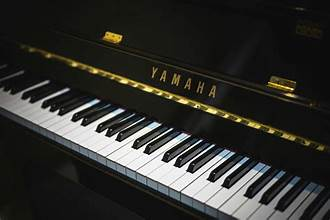
An upright piano
A digital keyboard
…the same principle applies: touch controls sound.
? Did you know? Many modern digital keyboards are designed with weighted or hammer-action keys to imitate the feel of Cristofori’s original invention.
✨ Final Thought
The invention of the piano reminds us that music is not just about playing the right notes, but about expression.
Softness can convey peace. Loudness can express joy or triumph. Dynamics bring music to life.
So the next time you hear or play a piano, remember—you are listening to an idea that transformed music over 300 years ago.
More Stories
Music, Time, and the Sound of New Beginnings
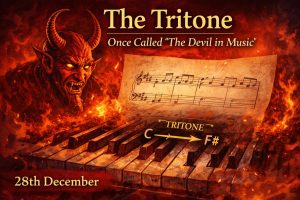
? Did You Know? The Tritone Was Once Called “The Devil in Music”
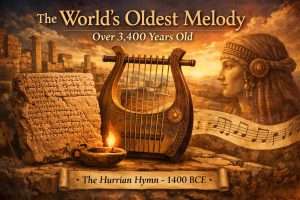
? Did You Know? The World’s Oldest Known Melody Is Over 3,400 Years Old